“…they did it knowing exactly what it would cost us. We will not be sacrificed quietly.”
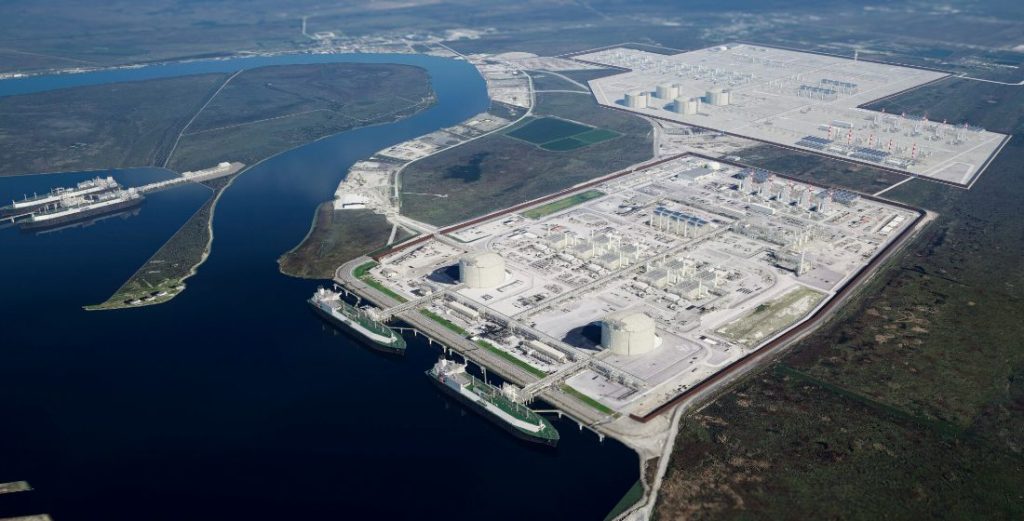
Cameron Parish, Louisiana — Communities on the frontlines of Venture Global’s LNG expansion express deep disappointment and moral outrage following the announcement that many major financial institutions (Bank of America, JPMorgan, Citibank, Wells Fargo, Goldman Sachs, Barclays, MUFG, Mizuho, SMBC, Natixis of Groupe BPCE, Standard Chartered, Santander, Intesa Sanpaolo, LBBW and Deutsche Bank) provided the financing necessary for the CP2 LNG project to reach final investment decision, with a phase two closing of $8.6 billion to a project being built on and against coastline communities, weeks after they formally reached out to these banks about the many human rights violations of the project.
“Banks like these will never have to look our children in the eyes and explain why the water isn’t safe, why the fish are gone, or why our way of life is disappearing—but we do. As Executive Director of Fishermen Involved in Sustaining Our Heritage, I represent families who have worked these waters for generations. We are not collateral for risky investments. When these banks chose to finance CP2, they chose profit over people, and they did it knowing exactly what it would cost us. We will not be sacrificed quietly.” — Robyn Thigpen, FISH
To people next to these facilities, this is what the CP2 FID means: billions of dollars locked into infrastructure that the International Energy Agency says is not needed for an energy transition, sited in a parish that is literally sinking, operated by a company carrying over $32 billion in debt with leverage ratios that far exceed any comparable firm in its sector, and defended by financial institutions that publicly committed to climate alignment yet continue to fund fossil fuel expansion. Independent financial analysts warn that the global LNG market is heading toward significant oversupply by 2027 to 2030, key markets in Europe and Asia are actively reducing gas dependence, and Venture Global’s own credit ratings have already been downgraded to negative following a major arbitration loss.
“Real energy security is not another methane terminal. It is energy sovereignty: the ability of a family, a community, a parish to generate the power it needs from resources it controls, close to home, without sending money or soldiers to the other side of the world to protect shipping lanes. Every dollar committed to CP2 is a dollar not invested in the solar panels, wind farms, coastal restoration, and community-led infrastructure that would actually protect us.” – Alyssa Portaro, Executive Director of Habitat Recovery Project
The banks that enabled this FID know that Venture Global’s dredging operations have already discharged an estimated 9,000 to 18,000 cubic yards of sediment into fishing waters, destroying approximately 260 acres of marsh habitat and killing 5.2 million oysters that businesses depend on. They know that the adjacent Calcasieu Pass terminal self-reported more than 2,000 air permit exceedances in its first year alone and was out of compliance with Clean Air Act requirements for 286 of its first 343 days of operation. They know that CP2 will be built in Cameron Parish, which is ranked the number one county in the entire United States for operational flooding risk, where 96% of physical infrastructure already faces flood exposure. They knew all of this and signed anyway.
They also know the broader context in which this FID arrives. The current Middle East conflict that is inflicting human suffering on Iranian civilians and people across the region has temporarily spiked LNG prices by 60%, handing Venture Global and its investors a war windfall. Fossil fuel companies do not merely benefit from these conflicts; their business model depends on them. Conflict keeps supply uncertain, uncertainty keeps prices high, and high prices keep profits flowing to shareholders while working people pay at the pump, in their energy bills, and with their tax dollars. The communities near these facilities breathe the fumes. The people of the Middle East pay with their lives. The banks cash in on fees.
“These banks knew about the air permit violations, the marsh destruction, the flood risk, and the human rights abuses being documented in our community, and they financed it anyway. Every exceedance, every acre of habitat destroyed, every health impact our families are living with now has their signature on it too. This is not just terrible climate policy. It is a human rights failure, and the institutions that made it possible need to be held accountable.” — James Hiatt, For A Better Bayou
This article was originally posted at sweetcrudereports.com
Be the first to comment