Precious Anga
Lagos — Nigeria’s natural gas production recorded modest growth in the first quarter of 2026, with total output rising to 687.09 billion standard cubic feet, while gas flaring declined by more than eight per cent, underscoring gradual progress in the country’s drive to monetise gas resources and curb environmental waste.
Data released by the Nigerian Upstream Petroleum Regulatory Commission, NUPRC, showed that gas production increased from 667.27 billion standard cubic feet in Q1 2025 to 687.09 billion standard cubic feet in the same period of 2026, representing a year-on-year growth of about 2.97 per cent.
A breakdown of the figures indicated mixed production trends across the three-month period. January 2026 production slipped slightly to 233.96 billion scf from 236.32 billion scf recorded a year earlier. However, output strengthened in February and March, with production rising to 212.62 billion scf and 240.51 billion scf respectively, making March the strongest production month within the review period.
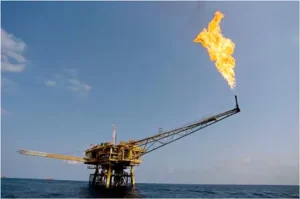
The report also showed notable improvement in Nigeria’s gas flare management, a long-standing challenge in the oil and gas sector. Total gas flared dropped from 50.95 billion scf in Q1 2025 to 46.83 billion scf in Q1 2026, reflecting an 8.1 per cent reduction.
Average flare intensity equally improved, declining from 7.65 per cent in Q1 2025 to 6.81 per cent in Q1 2026, suggesting operators captured more gas for commercial use rather than burning it off. Monthly flare rates also trended downward throughout the quarter, reinforcing signs of tighter compliance and improved operational efficiency.
A major shift emerged in the structure of Nigeria’s gas production during the period. Associated gas production, generated alongside crude oil extraction, weakened sharply, falling from 370.28 billion scf in Q1 2025 to 332.82 billion scf in Q1 2026. In contrast, non-associated gas production surged to 354.17 billion scf from 296.99 billion scf, highlighting stronger output from standalone gas projects and dedicated gas developments.
Nigeria’s export gas market posted one of the strongest performances in the quarter. Export gas sales climbed by over 30 per cent to 292.87 billion scf from 223.99 billion scf in Q1 2025, driven largely by improved liquefied natural gas exports and stronger global demand for Nigerian supplies.
However, domestic gas sales painted a different picture. Supplies to the local market declined by 8.5 per cent to 171.15 billion scf from 186.98 billion scf recorded in the corresponding period of 2025, raising fresh concerns about gas availability for power generation, manufacturing and industrial activities within Nigeria.
Despite the drop in domestic sales, total utilised gas remained largely stable at 639.68 billion scf, compared to 639.91 billion scf in Q1 2025, reflecting improved efficiency in gas capture and commercialisation.
With proven gas reserves estimated at over 215 trillion cubic feet, Nigeria continues to position natural gas as a critical transition fuel for electricity generation, industrial expansion, petrochemicals and export earnings. The Federal Government has also intensified enforcement measures and commercial recovery initiatives under programmes such as the Nigerian Gas Flare Commercialisation Programme to reduce routine gas flaring and unlock greater value from the nation’s vast gas resources.
This article was originally posted at sweetcrudereports.com
Be the first to comment