Goli Innocent
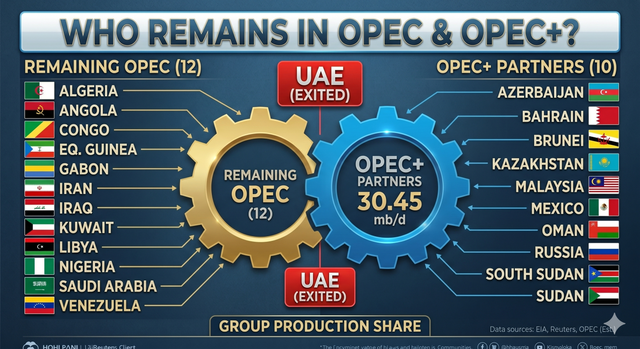
Lagos — The United Arab Emirates has formally withdrawn from the Organization of the Petroleum Exporting Countries OPEC and the expanded OPEC+ alliance, marking one of the most significant ruptures in global oil diplomacy in recent years.
The decision comes at a sensitive moment for the global energy system, already strained by escalating tensions linked to the Iran conflict, which has disrupted shipping routes and destabilised crude flows across major supply corridors.
The move effectively weakens the influence of OPEC at a time when oil markets are already under pressure from supply shocks, geopolitical uncertainty, and rising insurance and shipping costs across key export routes.
At the centre of the disruption is the Strait of Hormuz, a critical maritime chokepoint through which a significant share of global crude oil and liquefied natural gas passes daily. Increased security risks in the area have already forced delays and rerouting of shipments from Gulf producers.
Market tensions have been further complicated by political friction between Gulf states and Iran, with repeated attacks on vessels heightening fears of a wider supply disruption that could push global oil prices even higher.
The UAE’s exit also follows growing criticism of regional coordination within the Gulf Cooperation Council, with officials in Abu Dhabi arguing that collective security and political responses to recent attacks have been too weak to protect member states’ energy interests.
The development adds another layer to existing geopolitical pressure from the United States, where President Donald Trump has repeatedly accused OPEC of manipulating oil prices and placing undue strain on global consumers through production decisions.
With one of the Gulf’s key producers stepping away from coordinated output management, analysts say the balance of power within global oil markets could shift, potentially increasing price volatility in the short term.
The timing is particularly significant as energy markets were already adjusting to disrupted supply chains and heightened risk premiums linked to the ongoing Middle East crisis.
While further details of the UAE’s future production strategy remain unclear, the exit signals a new phase of fragmentation in global oil governance, with possible long-term implications for pricing stability and supply coordination.
This article was originally posted at sweetcrudereports.com
Be the first to comment