Goli Innocent
Lagos — Liquefied petroleum gas (LPG) is gaining ground as Africa’s most practical and immediate solution to its deepening energy access crisis, with industry players insisting the continent cannot afford to delay scalable alternatives while millions remain without clean energy.
At the African Refiners and Distributors Association conference in Cape Town, Sahara Group’s Executive Director, Wale Ajibade, made a direct case for LPG, arguing that Africa’s transition must prioritise solutions that deliver results now, not in the distant future.
“Africa’s transition must be built around solutions that work now,” he said.
“LPG is not an interim compromise, it is the fastest bridge to energy access, resilience and shared prosperity for Africa.”
His position comes against the backdrop of renewed global supply shocks. The recent crisis in the Middle East, which disrupted key shipping routes like the Strait of Hormuz, exposed how vulnerable African energy systems remain to external disruptions, especially for fuel imports.
“For African economies, the lesson is clear: energy resilience is built through infrastructure that incorporates robust storage, shipping optionality, diversified sourcing and regional coordination,” Ajibade said.
“The continent must outgrow its dependency on fragile global routes.”
Beyond supply security, the urgency is more visible at the household level. Nearly one billion Africans still lack access to clean cooking, relying instead on firewood and charcoal, which continue to drive deforestation, indoor air pollution, and rising health complications, particularly among women and children.
Industry projections show LPG could account for more than 60 per cent of clean cooking solutions in Africa, with about 75 per cent of ongoing transitions already linked to LPG adoption. Yet, the continent contributes only about four per cent to global LPG consumption, not because demand is weak, but because distribution systems remain underdeveloped.
What is missing is not awareness, but structure. Weak storage capacity, poor last-mile delivery, inconsistent cylinder standards, and import bottlenecks continue to slow adoption across key markets, including Nigeria.
To fix this, energy experts are pushing for coordinated regional action harmonising cylinder specifications, removing import duty barriers, and building bankable storage and distribution infrastructure that can attract long-term financing.
There is also a strong case for targeted subsidies and incentives to help low-income households switch to LPG, alongside data-driven tracking systems to measure adoption and close gaps quickly.
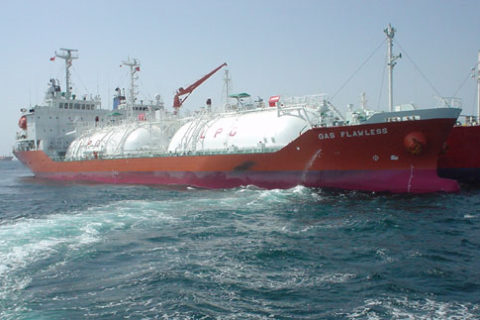
Sahara Group said it has already taken steps in that direction, building an integrated LPG value chain that covers trading, shipping, storage, and distribution. The company disclosed that it has delivered over six million cubic metres of LPG across West Africa since 2017, backed by expanding storage facilities and a growing fleet of carriers.
The message from on the the leading players in the industry is blunt: Africa’s clean energy transition will not be won on ambition alone. Without immediate investment in LPG infrastructure and access, the continent risks prolonging a crisis that continues to affect public health, environmental stability, and economic productivity.
This article was originally posted at sweetcrudereports.com
Be the first to comment