Precious Anga
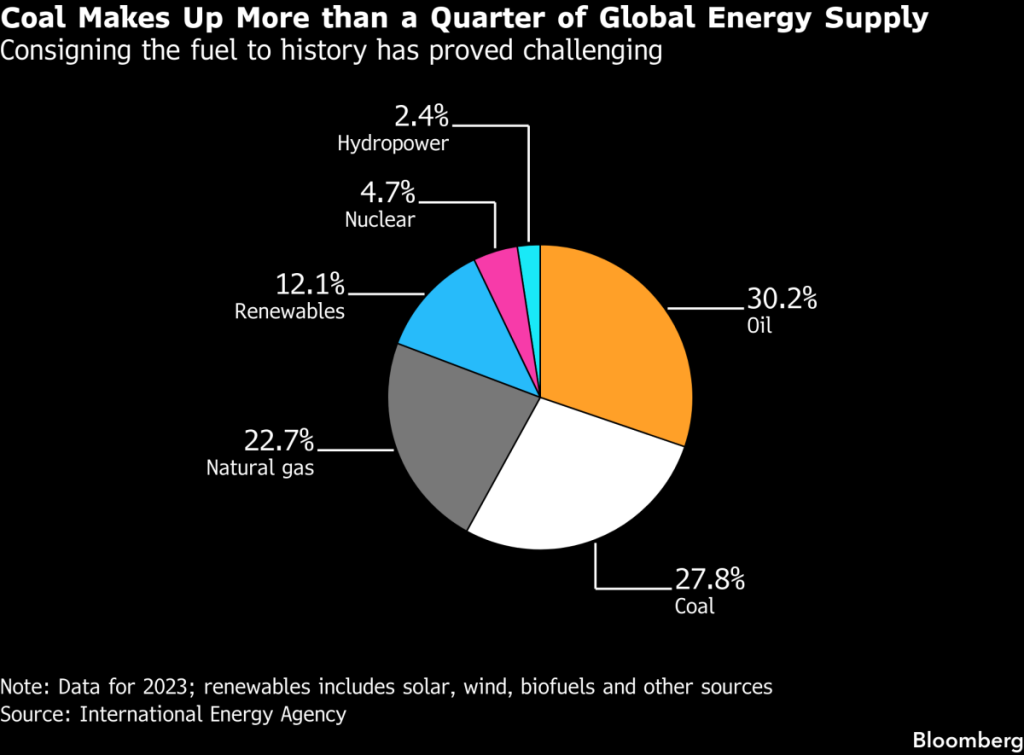
Lagos — As global gas prices climb and supply disruptions deepen amid tensions in the Middle East, countries that once championed aggressive clean energy transitions are increasingly turning back to coal to secure electricity supply and shield their economies from energy shocks.
From Asia to Europe, governments are extending the lifespan of coal-fired plants, reviving reserve facilities and slowing planned phase-outs as concerns over affordability and grid stability outweigh climate commitments.
The shift highlights a difficult reality confronting policymakers: when energy security comes under pressure, coal despite its environmental cost remains a dependable fallback option.
Coal remains the world’s dirtiest major energy source. It accounts for roughly 40 per cent of global greenhouse gas emissions and nearly 70 per cent of emissions linked to energy combustion. On an energy-equivalent basis, coal emits almost twice the carbon dioxide released by natural gas.
Yet soaring gas costs and disrupted LNG flows are changing energy calculations worldwide.
India, which sources around 60 per cent of its liquefied natural gas imports through the Strait of Hormuz corridor, has intensified its reliance on domestic coal as gas prices surge. Facing severe heatwaves and temperatures above 45°C in several regions, the country’s electricity demand climbed to a record 257 gigawatts.
Coal plants now supply more than 75 per cent of India’s peak electricity demand. Authorities have directed imported coal facilities to operate at full output while idle gas plants are being restarted to support the grid.
South Korea is also shifting course. Coal-generated electricity has jumped sharply as Seoul cuts dependence on expensive LNG. Coal imports, particularly from Russia, surged during the first quarter, while authorities scrapped long-standing seasonal limits that capped coal plants at 80 per cent operating capacity.
Nuclear reactors are also being pushed to higher utilisation levels to strengthen supply security.
Europe, long seen as the global face of energy transition policies, is facing similar pressures.
In Germany, discussions are intensifying over slowing coal exit timelines as delays in hydrogen-ready gas projects threaten industrial energy security. The country’s ambitious plan to replace coal with up to 15 gigawatts of gas-fired backup generation has slipped behind schedule, raising fears over future baseload power shortages.
Industry groups are now urging Berlin to allow coal plants placed in reserve mode to rejoin the electricity market to cushion volatile energy prices.
Italy has gone even further. Lawmakers voted to delay the country’s coal phaseout deadline by 13 years, shifting it from 2025 to 2038. Officials justified the reversal by citing geopolitical instability and supply concerns linked to Middle East tensions. The country’s remaining coal stations, largely operated by utility giant Enel, are now viewed as strategic emergency assets.
Despite coal’s renewed momentum, analysts say the development does not necessarily signal the collapse of the global clean energy transition.
Renewables continue to enjoy a strong cost advantage in many markets. Estimates show the Levelised Cost of Energy for solar and onshore wind ranges between $24 and $96 per megawatt-hour, compared with roughly $68 to $166 per megawatt-hour for newly built coal plants.
That cost gap explains why wind and solar deployment continues to expand globally even as coal regains temporary ground.
For energy-importing economies like Nigeria, the emerging global trend carries important lessons. Energy transitions are not driven by climate goals alone; they are shaped by affordability, security and access.
As gas markets tighten and geopolitical tensions disrupt fuel flows, countries are choosing whatever keeps factories running, homes powered and economies stable.
The message from the global energy market is increasingly clear: in moments of crisis, nations prioritise energy security first and for many, coal remains the uncomfortable insurance policy.
This article was originally posted at sweetcrudereports.com
Be the first to comment